
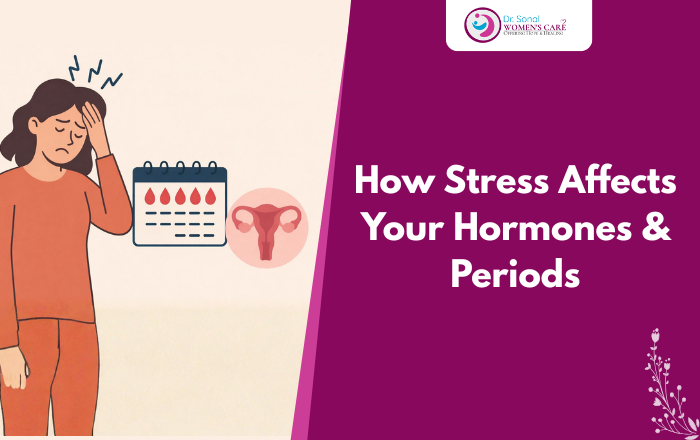
Life can be stressful. Deadlines, family worries, money pressure, poor sleep — it all adds up.
What many women don’t realize is that this stress can directly affect their menstrual cycle.
If your periods have become late, irregular, painful, or have suddenly stopped, stress could be a key reason.
Many women experience hormone and cycle changes during busy or emotionally difficult phases of life. When stress stays in the body for too long, it can disturb the natural hormone rhythm that controls your monthly periods.
Your body is not failing you — it is responding to pressure.
In this blog, we’ll explain how stress affects hormones, why periods change, and what steps can help bring your cycle back on track — all in simple, easy-to-understand words.
What Happens to Your Body When You Are Stressed?
When you feel stressed, your body releases a hormone called cortisol.
Cortisol is helpful for short-term situations.
But when stress lasts for weeks or months, high cortisol levels can disturb other important hormones.
This can affect:
- Estrogen
- Progesterone
- Ovulation
- Timing of your menstrual cycle
Fact: Research shows that long-term stress can cause changes in the menstrual cycle in up to 40% of women.
How Stress Affects Women’s Hormones
Stress Lowers Hormone Balance
Stress sends a signal to your brain that the body is under pressure.
In response, the brain may reduce signals that release female hormones.
This can lead to:
- Hormonal imbalance
- Irregular periods
- Mood changes
Stress Can Stop Ovulation
When stress levels are high, ovulation may not happen.
If ovulation stops:
- Periods may come late
- Periods may be missed
- Bleeding patterns may change
This is one of the main reasons stress affects menstrual cycles.
How Stress Affects Your Periods
Stress can change periods in many ways, including:
- Delayed periods
- Missed periods
- Early periods
- Heavy bleeding
- Very light bleeding
- Painful cramps
- Strong PMS symptoms
Even short-term stress, such as exams, travel, illness, or emotional shock, can affect your cycle.
Your body is trying to protect itself.
Signs of Stress-Related Hormonal Imbalance
Along with period changes, you may notice:
- Irregular periods
- Mood swings
- Feeling anxious or low
- Tiredness
- Weight gain or loss
- Acne or hair fall
- Poor sleep
If these symptoms continue for more than 2–3 months, medical advice is important.
Can Stress Cause Missed Periods?
Yes.
Stress can delay or stop periods for a short time.
The brain controls hormones.
When stress signals are strong, the brain may pause signals that control ovulation and menstruation.
Once stress reduces, periods often return — but not always on their own.
Simple Ways to Reduce Stress and Support Hormone Balance
Small daily habits can help:
- Sleep for 7–8 hours
- Eat meals on time
- Drink enough water
- Walk or stretch daily
- Practice slow breathing
- Take breaks from screens
- Share your worries with someone
These steps support your body. However, if a hormone imbalance is already present, medical guidance is important.
When Should You See a Doctor?
You should consult a gynaecologist if:
- Periods are irregular for more than 2–3 months
- Periods suddenly stop
- Bleeding is very heavy
- Pain affects daily life
- Stress feels unmanageable
- You are planning a pregnancy
Ignoring period problems can lead to long-term hormone issues.
Frequently Asked Questions
Q1. Can stress really stop your period?
Yes. High stress can stop ovulation, which means no period. Once stress reduces, cycles usually return within 1–3 months.
Q2. How long does it take for periods to return after stress?
For many women, periods return within 1–2 months after stress levels reduce.
Q3. Do I need tests for stress-related period problems?
A doctor may suggest simple tests to check hormone levels and rule out other causes.
Q4. Can stress affect getting pregnant?
Yes. Long-term stress can interfere with ovulation, making pregnancy harder. Reducing stress supports fertility.
Don’t Ignore Stress-Related Period Problems — Get the Right Help Today
Your body speaks through irregular periods, painful cramps, and ongoing discomfort. These signs are a reminder to take action.
You don’t have to struggle alone.
Dr. Sonal Women’s Care Clinic, located in Ambegaon Budruk, Pune, supports women dealing with hormonal imbalance and irregular periods.
Led by Dr. Sonal Katarmal, gynaecologist and obstetrician, the clinic helps women understand what’s happening in their bodies and find practical solutions.
At our women’s health clinic in Ambegaon Budruk, we support you through stress-related cycle changes, PCOS, and fertility concerns with the right guidance and care—because your health matters.
Location: Ambegaon Budruk, Pune
Book your appointment today
Stress is part of life — but ongoing discomfort doesn’t have to be. With the right support and small daily changes, balance can return, and your cycle can feel normal again.